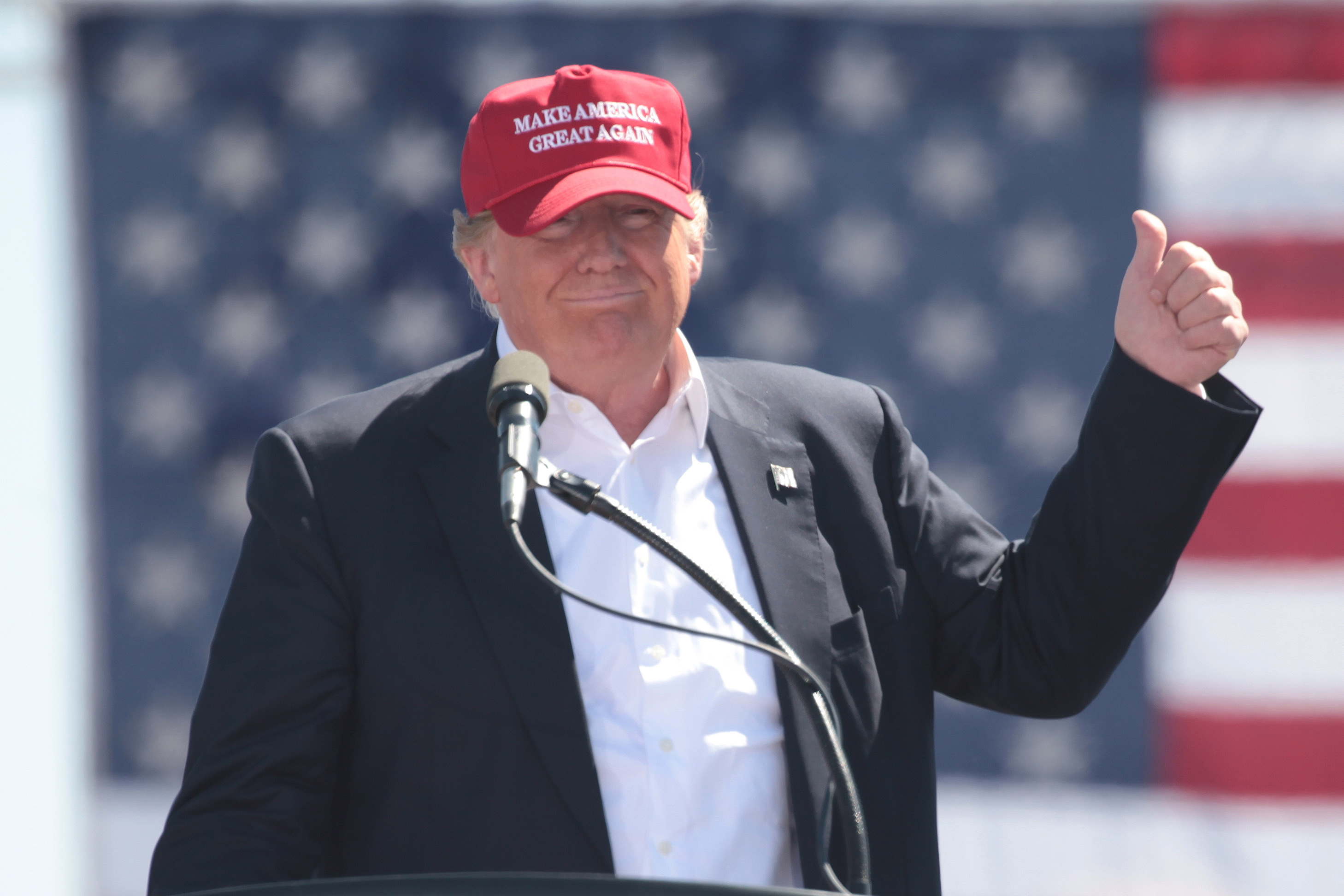
After vowing to ‘shake the rust off America’s foreign policy’ (Trump, 2016), Donald J. Trump was elected as the 45th President of the United States and astonished the world with his unconventional political style. The post war liberal order, marked by ‘economic openness, multilateral institutions, security cooperation and democratic solidarity’ (Ikenberry, 2018), underwent considerable change since he took office. Carrying his slogan ‘America First’, the President has been pursuing a realist approach in dismissing international organisations and agreements, disrupting America’s partnership with former allies, confusing America’s relationship with rival powers and taking a remarkably arbitrary stance in affairs concerning Third World countries. Although the President’s erratic statements are not always duly performed, and the breakdown of the post war order would cost him support from some of his voters, his illiberal foreign policies and inconsistent rhetoric, combined with the weight of his foreign policy promises in his electoral success, suggest that Donald Trump is determined to impair or even ‘end the existence’ (Oxford Dictionary of English, n.d.) of the post war liberal order with America’s hegemonic status in the world.
Before assessing Trump’s policy, it is worth noting that Donald Trump might have made his decisions out of sheer impulses, and that his own wish might not have been adequately represented in his foreign policies. In both cases, attempts to evaluate his true beliefs would be unfeasible. Peter Westmacott, a former British ambassador to the United States, said that the President had ‘a limited attention span’ (2017), casting doubt on his competence. Bob Woodward, renowned for his report on the Watergate scandal, revealed in his new book Fear President Trump’s imprudent request to kill the Syrian president after a sarin gas attack on Syrian rebels in 2017 and a series of other instances implying his rashness, and asserted that Trump’s former top economic adviser Gary Cohn stole the documents authorising America’s withdrawal from the North America Free Trade Agreement (NAFTA) and a deal with South Korea to prevent the acts. An anonymous op-ed published on New York Times by an alleged senior official disclosed a potential resistance against the president within the administration, further disputing the President’s actual influence over America’s policy. Even his tweets are probably subject to his aides’ ‘deliberately inserting grammatical errors’ in an effort to ‘mimic his style’ (Linskey, 2018). Nevertheless, the validity of these claims are open to question, and, without rejecting their possibility, the following discourse will focus on acknowledged statements and policies.
Whilst examining Trump’s motives behind his political choices, it is essential to reflect on the reasons for Trump’s victory in the 2016 election and his strong inclination to appeal to his voters. Of Trump’s 17 significant campaign promises listed by the British Broadcasting Company (BBC), 12 entail actions with extensive international influence which oppose the post war liberal order, including banning Muslims from travelling to the United States and vowing to stop China from ‘raping’ the US and indicating that his unorthodox stance against the established global system might have procured for him a considerable amount of popularity. As a research by the Atlantic suggests, ‘79 per cent of white working-class voters who had anxieties about the “American way of life” chose Trump over Clinton’ (Khazan, 2018), which joins other studies in concluding that Trump’s electoral success was largely due to what was called ‘white vulnerability’. Subsequently, it can be assumed that Trump’s protectionist, anti-liberal strategies that alienate ethnic minorities and prioritise white Americans had a particular appeal to his supporters. In order to perpetuate his acclaim, Trump needs to continue his position against the establishment and oppose the previous international order, and he could thus be immensely determined to damage it.
However, the most explicit reflection of Trump’s intentions is his policies, and the most obvious evidence of his hostility to the liberal order is his chiefly confrontational attitude towards multilateral cooperation. In terms of global governance, the United States led a series of illegal missile strikes against Syria without the authorisation of the United Nations in April 2018 and withdrew from the United Nations Human Rights Council in June, calling it a ‘cesspool of political bias’ (Hayley, 2018). In September, Trump’s national-security adviser John Bolton fiercely attacked the International Criminal Court (ICC) and vowed to let the ICC ‘die on its own’. By dismissing these institutions and condemning them without substantial proof of their prejudice, Trump has demonstrated his rejection of scrutiny from supranational organisations and adherence to Westphalian national sovereignty. America’s exit from the 2015 Paris Agreement confirmed Trump’s unwillingness to collaborate even in resolving issues that most require global cooperation. In light of America’s predominance on the world stage, these direct attacks on world governance deal a heavy blow on the post war order, which would not have happened had Donald Trump not wished it.
His positions on multilateral economic and military collaborations, however, are more ambiguous. The departure of the United States from the Trans-Pacific Partnership (TTP) potentially surrendered America’s leading role in free trade in the South China Sea, displaying Trump’s reluctance to pursue lower tariffs promised by the TTP at the expense of possible rise in unemployment. Trump also called the North America Free Trade Agreement (NAFTA) ‘the worst trade deals ever made’ (Trump, 2018) and threatened to withdraw from the World Trade Organisation (WTO). Nevertheless, he unexpectedly said he was reconsidering joining the TTP in April 2018 and notably has not yet left the NAFTA or the WTO. This suggests that either Mr Trump is remarkably restrained by disapproving officials or he is reasonably aware of the significance of multilateral cooperation in trade, which is part of the post war liberal order. Moreover, whilst his demand for members of the North Atlantic Treaty Organisation (NATO) to boost military spending has ‘disorientated NATO leaders’ (Herszenhorn and Bayer, 2018), it was addressing the existing issue of member states not meeting the alliance’s target. Therefore, one might argue that Donald Trump recognises the economic and military benefits of global partnership and that his is asserting America’s rightful sovereignty before greater discontent leads to a complete collapse of the rules-based system. Even so, his blatant rhetoric and inconsistency render truth a subjective entity that is defined by the most powerful, undermining trust amongst countries, which is central to international cooperation and hence the post war liberal order.
The President’s imprudence is also manifest in his interactions with individual countries and entities, most notably America’s western allies. After claiming that the European Union (EU) was ‘set up to take advantage’ (Trump, 2018) of the US, and in spite of their friction over international organisations, Mr Trump reached an agreement with the EU to work towards ‘zero’ tariffs, barriers and subsidies, namely to avoid a trade war. Whilst it is likely that the progress on free trade is a random solution after the backlash of Trump’s remarks, there is also the possibility that Trump was employing a ‘carrot-and-stick’ approach in obtaining a finer agreement with America’s largest trading partner, and at the same time asserting America’s dominance over its allies. Trump perceives Canada, America’s peaceful neighbour, as a national security threat, and delivers self-contradictory comments on the United Kingdom’s departure from the EU. These gestures exhibit Trump’s eagerness to highlight America’s importance in bilateral relationships by threatening to abandon any that appears to him to have benefited the other party more than the US, paying no heed to established partnerships which were key to the post war liberal order led by the United States and its allies. More crucially, Mr Trump dismisses all retorts as nothing more than another version of fabricated truth that serves merely the interest of individual states, ignoring objective facts and shunning rational debates, which converts global politics into a sheer competition of power. In fact, according to a Gallup poll, global confidence in US leadership has fallen from 48% to 30% after Trump’s first year in the administration. This is highly toxic to the post war liberal order based on calm and calculated diplomacy.
The President’s approach towards America’s rival powers has exhibited on both personal and public levels his preference for strongman rule that prioritises narrow national interest, which again challenges the post war liberal order. He has expressed admiration for their dictator leaders by praising the Russian President as a ‘good competitor’ (Trump, 2018) and calling Chinese President Xi Jinping’s removal of presidential term limits ‘great’ (Trump, 2018). The ongoing Trump-Russia investigation and Trump’s fury against it imply the possibility of Mr Trump coordinating with Russia to manipulate the 2016 US election, and, if confirmed, this suggests that Trump has reaped the benefits of appreciation from a country famous for its ‘Russian aggression’ and rejection of international rule, which leads to two possibilities, the first one being that Mr Trump shares Russia’s vision of a billiard board model of global politics, the second one being that President Putin might hold compromising information on Trump and uses Trump as a puppet. In both cases, Trump would be determined to destroy the liberal world order. On the other hand, mimicking Russia and China in their uncompromising stance towards their rivals, the President has waged a protectionist trade war with China by imposing 25% tariffs on Chinese exports, which, according to economists at New York Federal Reserve, is unlikely to achieve the allegedly intended reduction of trade deficits. The Director-General of the WTO Roberto Azevêdo believes that ‘a continued escalation would risk a major economic impact, threatening jobs and growth in all countries, hitting the poorest hardest’ (Azevêdo, 2018). However, an admirer of toughness in a dubious relationship with Russia, Trump clearly cherishes his popularity derived from some Americans’ negative sentiments towards globalisation, and values rhetorical national strength over long-term economic impacts. His regard for President Xi did not make him hesitate to confront the second largest economy in the world and implement protectionist policies that flout the post war liberal order.
In resolving international conflicts, the President has adopted an even less conventional political manner, which involves explicit threats on the social media and expels meticulous diplomacy. When confronted by Kim Jong-un’s nuclear threats, President Trump called the North Korean leader a ‘little rocket man’ and insinuated that he was ‘short and fat’ on the social media, terms never formally used by any president to describe his counterpart. The historical first summit meeting between the American President and Leader of the North Korea in June 2018 resulted in the ‘Sentosa Declaration’ which disappointed many with its omission of a ‘verifiable’ and ‘irreversible’ nuclear disarmament of the Republic, in stark contrast with Nixon’s visit to China in 1972 that took meticulous planning, settled the Taiwan problem and laid the groundwork for future US-China relationship. Trump, indeed, faced higher pressure domestically, and yet the lack of preparation and careful consideration contributed to the continuation and further development of North Korea’s nuclear programme even after Trump declared the country ‘no longer a nuclear threat’ (Trump, 2018). His break with tradition was again exemplified in his decisions to withdraw from the Iran nuclear deal, the Joint Comprehensive Plan of Action (JOCPA), and swiftly afterwards recognise Jerusalem as the capital of Israel by relocating the US Embassy in May 2018. By imposing new sanctions on an already distraught state, Donald Trump has only aggravated the situation in Iran, and by siding with Israel on one of the main issues in the Israeli-Palestinian conflict, Trump has, according to the Palestinian chief negotiator Saeb Erekat, taken ‘Israelis and Palestinians off the path to peace’ (2018). Trump’s simplistic word choice and hard line position represent a drastic change from rigorous negotiations to a preference for instant solutions, despite them being ill-informed.
Furthermore, some of Mr Trump’s controversial actions are widely considered intolerant and even racist, which are distinctly against the solidification of the ‘democratic peace’ that the United States committed itself to in the 1990s. He proposed an executive order that would prohibit citizens of seven Muslim-majority nations from travelling to the Untied States, and, whilst his defenders claimed that the order targeted ‘countries that failed to provide the minimum baseline of information needed to vet their nationals’ (the Economist, 2018), his opponents are backed by the President’s numerous anti-Muslim tweets and his campaign trail calls for a ‘complete and total shutdown’ of Muslim travel to America. He called Mexican migrants ‘criminals’ and ‘rapists’, and promised to build a wall on the US-Mexico border. After the Charlottesville rally in August 2017, Trump referred to white supremacists as ‘very fine people’. Considering the fact that Trump offered praises to dictators and described western leaders as weak, it could be said that the President dehumanises people in his speech and does not pay due respect towards human rights and equality, which are key to a rules-based international system.
In conclusion, President Donald Trump has demonstrated a clear tendency towards destroying the post war liberal order. As an anti-establishment figure, Donald Trump has, in all areas examined above, displayed an enthusiasm in pursuing resolutions that most exhibit America’s strength and ignoring the achievements of previous generations in establishing a rules-based international order. His undiplomatic words and inconsistency, whilst preserving economic cooperations that benefit America, undermine America’s credibility across the world. It is difficult to measure the President’s determination, but it is safe to say that Donald J. Trump is highly determined to destroy the post war liberal order.
Donald Trump is a phenomenon that foreign countries haven’t seen. So it is a shocking experience to them that he came to office. (Henry Kissinger)

 Dolores Xu